NuHome Brand Evolution
NuHome Calgary
2025
ROLE
LEAD UX DESIGNER. OVERSAW END-TO-END UX DESIGN, DIGITAL STRATEGY, AND MARKET ROLLOUT ACROSS WEB AND MOBILE.
IMPACT
ACHEIVED 100K IN SALES WITHIN THE FIRST MONTH. RECORDED A 13% USER CONVERSION RATE, WHICH IS 6.5x HIGHER THAN THE INDUSTRY STANDARD.
INTRODUCTION
Like many home service companies in Calgary, NuHome Calgary (formerly Signature Exteriors) relied heavily on in-person outreach, limiting brand recognition and making lead generation inconsistent. NuHome approached us with a clear challenge:
Move beyond traditional door-to-door sales and build a brand that could scale.
By establishing a unified and memorable brand, NuHome aimed to increase awareness, strengthen trust, and create a more reliable flow of high-quality leads in an industry where strong branding is rare.

INITIAL MARKET RESEARCH
We began with foundational market research to better understand Calgary’s home services landscape and validate NuHome’s early observations. A consistent pattern emerged quickly: many local companies had minimal branding, limited digital presence, and relied heavily on door-to-door sales.
The market felt fragmented, with numerous small, ad-hoc crews competing for the same neighborhoods.
As we dug deeper, we uncovered the underlying reason.

Market Research
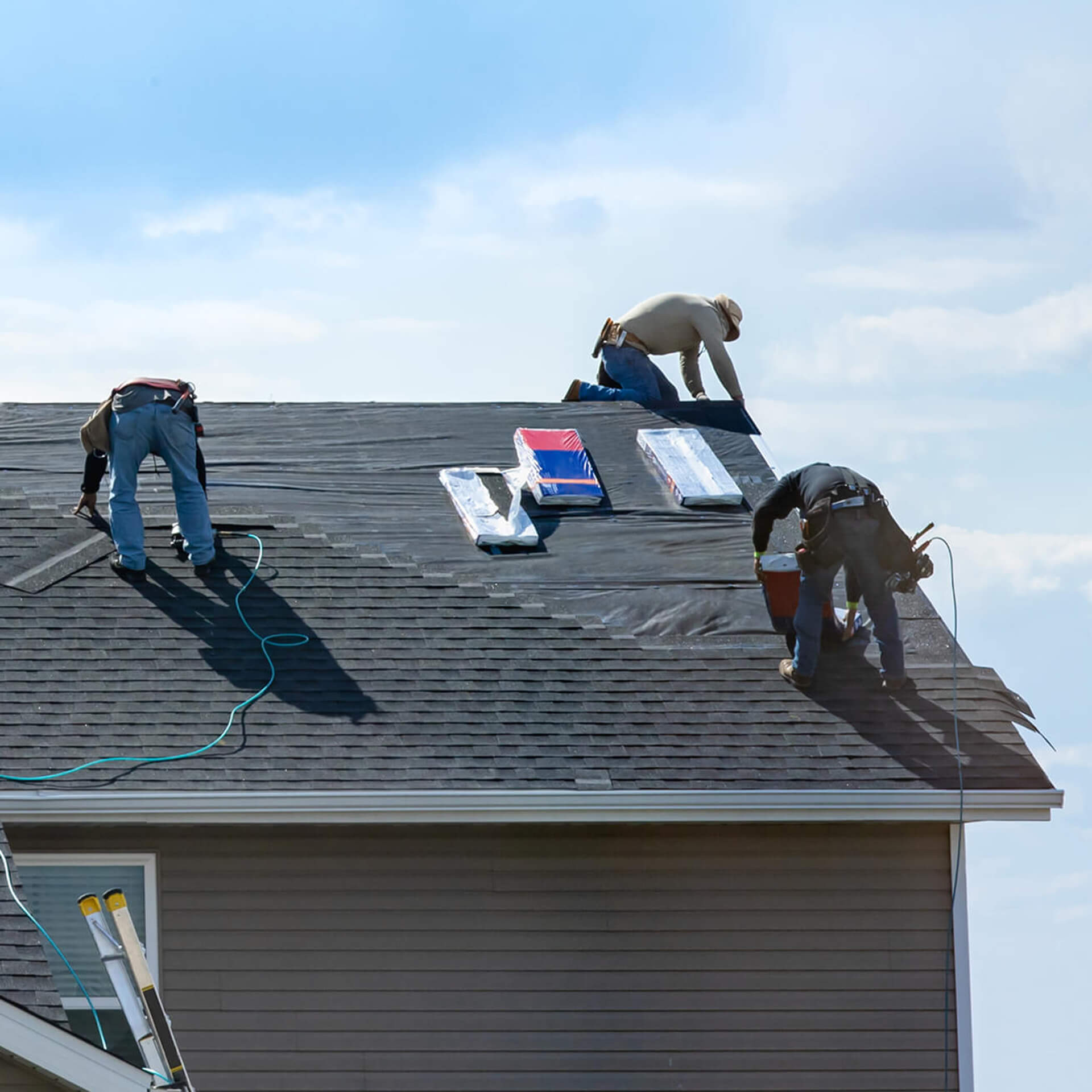
Calgary sits in hailstorm alley
Hailstorm alley refers to an area that experiences severe annual hailstorms capable of causing significant exterior damage. Because insurance often covers these repairs, homeowners tend to act quickly and depend on whoever arrives first, creating a fast-moving and reactive market where branding has historically taken a back seat.
This insight shaped our direction. Rather than treating NuHome as another general home service provider, we saw an opportunity to position them as trusted experts in emergency and storm-related exterior repairs. A unified, memorable brand paired with clear service differentiation would give them a strong advantage in a market driven by urgency and trust.
COMPETITIVE ANALYSIS
How might we establish NuHome as a trusted contractor in emergency and storm-related exterior repairs?
With a clearer direction for NuHome’s market position, I conducted a detailed competitor analysis to understand the established players within Calgary’s home services landscape. My goal was to assess how companies communicated their value, differentiated themselves, and showed up across digital channels.

Competitor Research
A similarly named company was already operating in Calgary
Signature Roof Tile was already operating in Calgary. Although they supply materials rather than provide installation or repair services, the similarity in name posed a real risk. It could create confusion for homeowners, dilute brand recognition, and undermine our strategy to position NuHome as a distinct, trustworthy leader.
Recognizing this, we paused the broader strategic direction and shifted our focus to a full brand revamp. Strengthening and differentiating the brand became our priority to ensure NuHome could enter the market with clarity, confidence, and a truly unique identity.
BRAND REVAMP
With this new direction in place, the brand needed to signal more than a name change—it needed to represent a clear step forward.

The goal was to create a visual identity that communicated structure, strength, reliability, and trust.
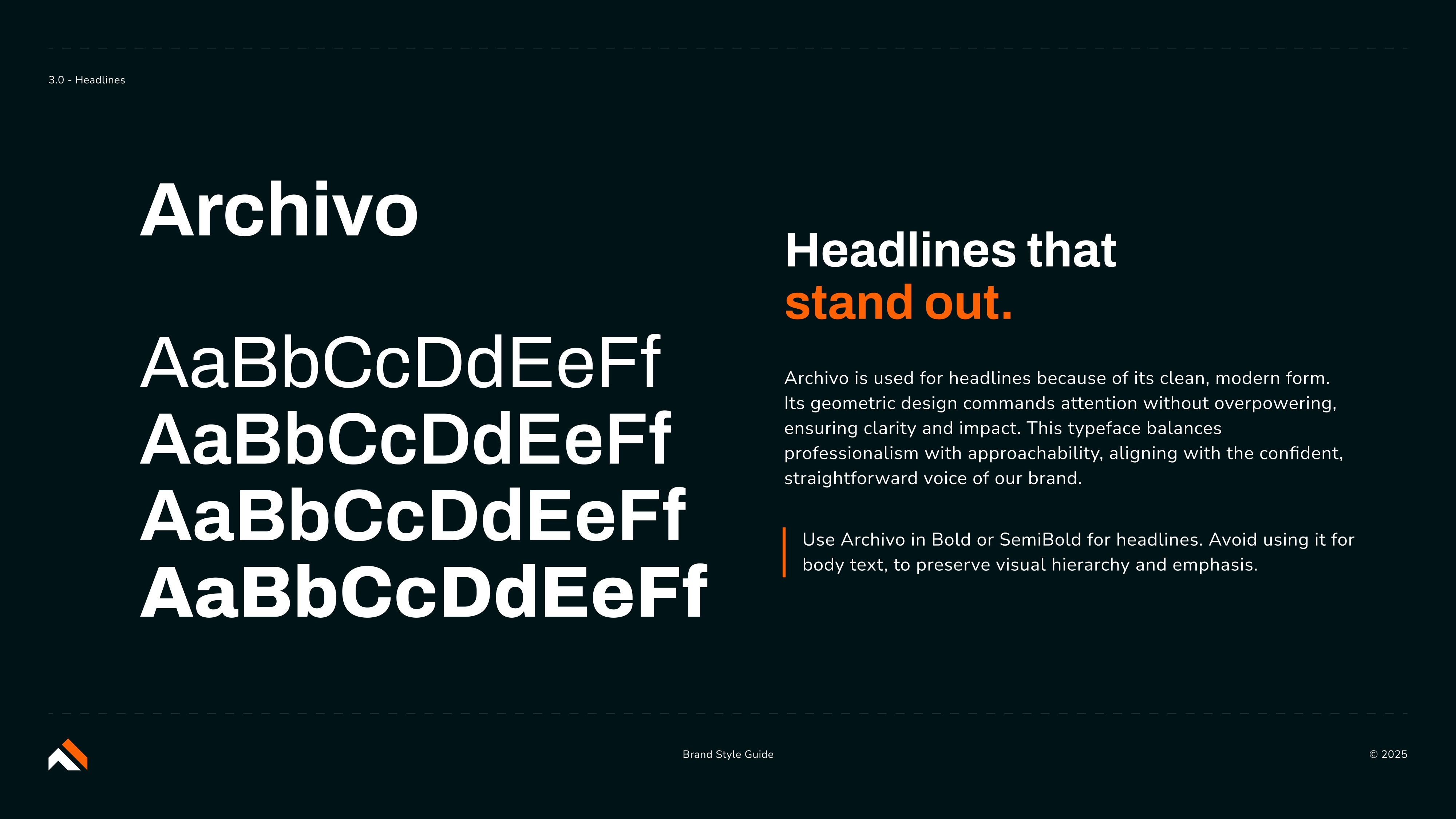
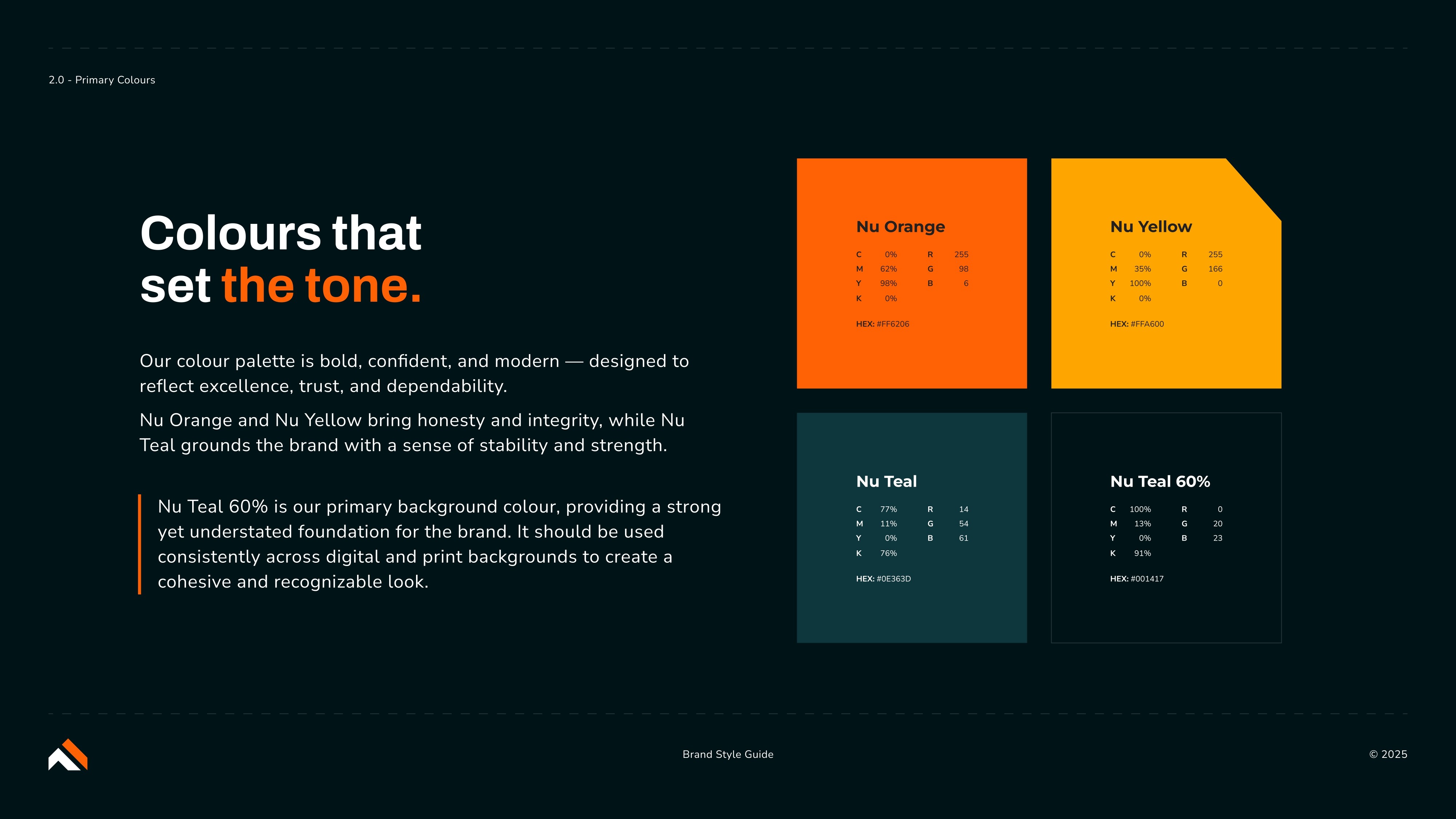
I supported the brand refresh by focusing on style application and system clarity. My work centered on selecting and applying typography and colour in a way that reinforced trust under high-stress, time-sensitive conditions, and documenting those decisions in a clear, usable style guide to ensure consistency across all touchpoints.
Typography and color were chosen to reduce visual friction while signaling reliability and urgency. Type styles balanced authority with warmth to support fast scanning as well as longer reading, while the color palette paired energetic tones with stable, grounding ones to communicate responsiveness, strength, and dependability.
Together, these choices helped the brand feel modern and confident while reinforcing trust at every interaction.
USER RESEARCH
With a new brand established and ready to compete in Calgary’s home services market, I returned to user research to better understand the people NuHome needed to serve. I focused on uncovering key motivations, needs, pain points, and intent—insights that would directly inform the digital strategy and site structure.
I analyzed local search trends and keyword volume using ahrefs to understand how homeowners in Calgary search for exterior services and what signals urgency versus long-term consideration.
In parallel, I used NuHome as a proxy user and conducted interviews to learn from their direct experience working with past, current, and prospective customers. Together, these inputs helped us identify clear patterns in user intent and decision-making.
From this research, two primary personas emerged.

Stakeholder
The Homeowner
The Homeowner is typically looking to upgrade, repair, or improve their existing home through a more considered decision-making process. They demonstrate strong local intent, favoring companies based in Calgary that understand local conditions. Their primary concerns center around craftsmanship, reliability, and fair pricing.

Stakeholder
The Affected Owner
The Affected Owner is responding to sudden damage caused by Calgary’s seasonal hailstorms. Their needs are immediate and emotionally charged, often tied to insurance timelines and the risk of further property damage. While they also show strong local intent, responsiveness and clarity matter far more than price, which is typically covered by insurance.
DIGITAL STRATEGY
With our research findings validated and assumptions confirmed, we shifted focus to defining a digital strategy that would best serve NuHome’s customers and support long-term growth. The goal was to translate strong local intent and a clear need for speed and reliability into a structure that would perform in both search visibility and conversion.
We made the strategic decision to create four separate service-specific websites, each designed to align tightly with user intent.

SEO
Separate sites give us greater control over keyword targeting and search intent
This would improve NuHome’s visibility for homeowners actively searching for roofing, siding, windows and doors, or insulation services in Calgary, positioning the brand to capture more qualified organic traffic.

Conversion
This structure enabled stronger message match
Each site could speak directly to the user’s immediate need, reducing cognitive load and making it easier to guide users toward action. By showing users exactly what they were searching for, we removed friction and improved the likelihood of conversion.
WIREFRAMING
I began the design process with low-fidelity wireframes, focusing on two priorities that would position NuHome as a trusted, emergency-ready home service provider.
Design Goal
Reinforce NuHome’s role as a reliable emergency provider
To reinforce NuHome’s role as a reliable emergency provider, I researched common design patterns used by emergency-driven services. This included reviewing how other home service companies surface urgency, as well as examining “panic button” and alert-style patterns used in sectors such as healthcare and IT.

Design Goal
Creating a page structure that builds trust
Alongside urgency, trust was a key driver of the page layout. I approached the structure from the ground up, carefully sequencing content to tell NuHome’s story in a logical and reassuring way. Early sections establish credibility and local roots, followed by clear explanations of services, craftsmanship, and expertise.
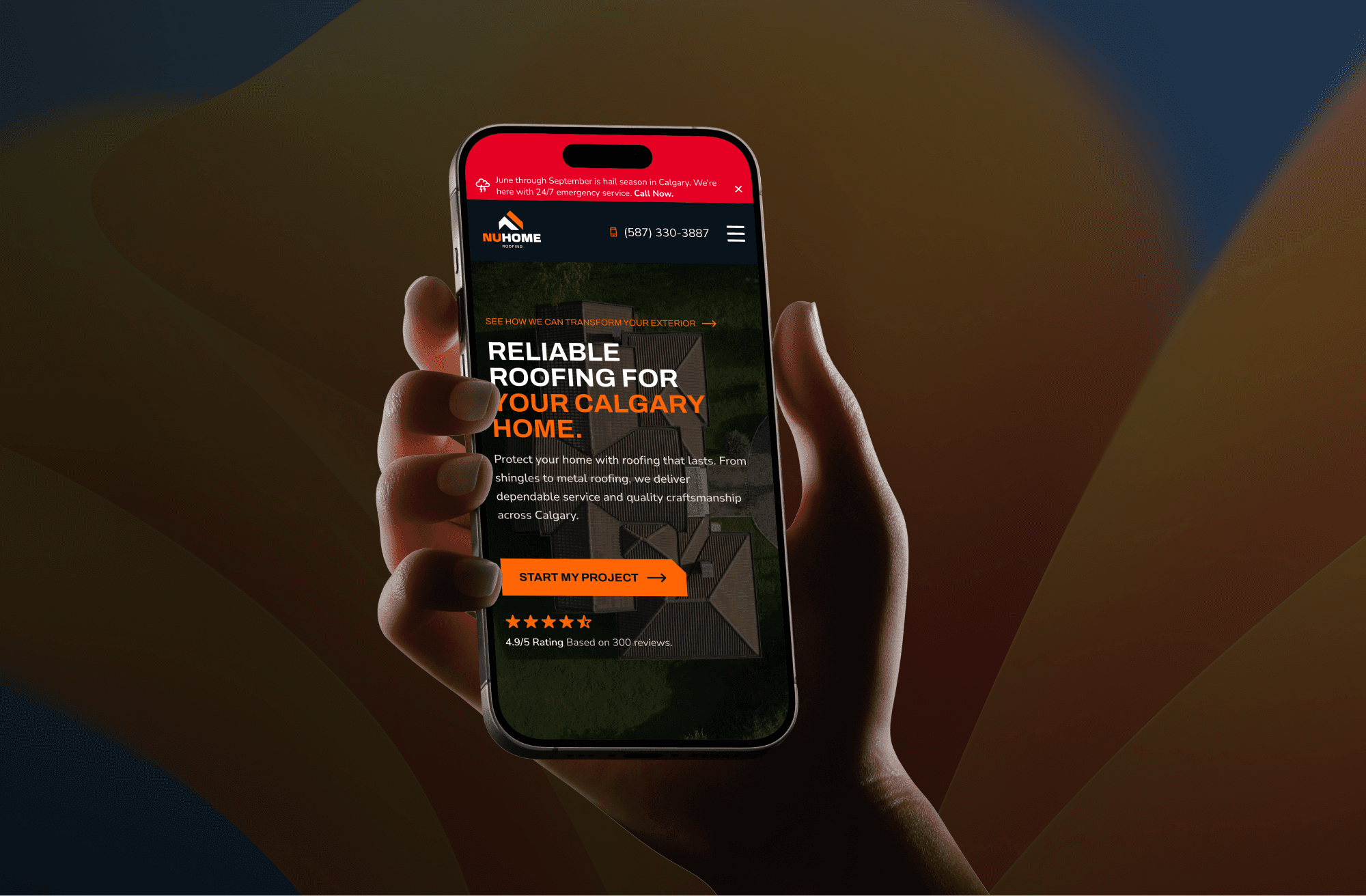
Together, these priorities informed a wireframe structure that balanced urgency with reassurance. We landed on a layout that surfaces emergency readiness early through a persistent alert, while guiding users through a clear, trust-building narrative that highlights NuHome’s local expertise, craftsmanship, and reliability.
This foundation ensured users could quickly assess credibility, understand next steps, and convert with confidence—whether responding to an emergency or planning a longer-term project.
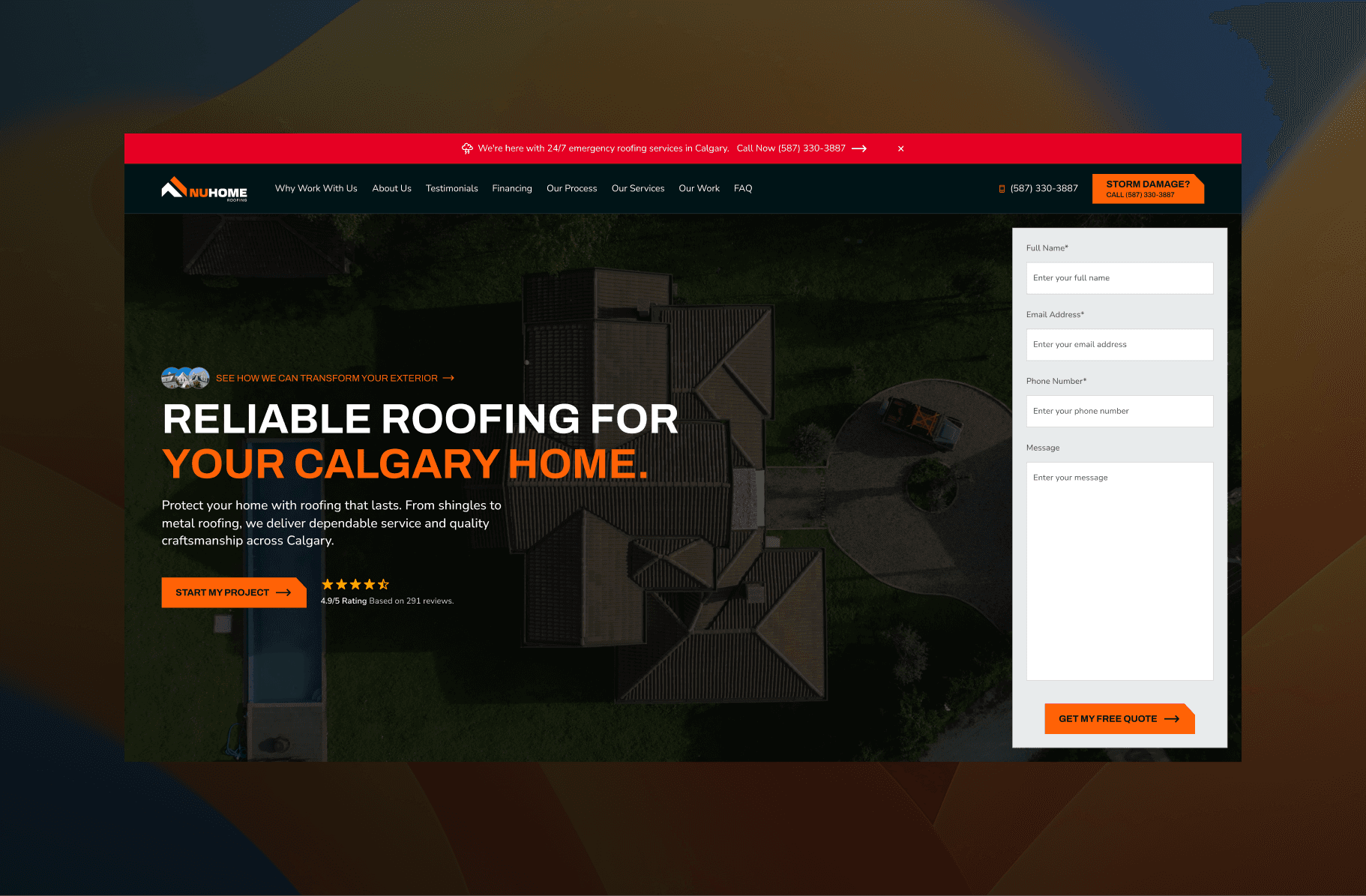
HIGH-FIDELITY DESIGN
With the design goals established during wireframing, I moved into high-fidelity design to bring those decisions to life across each NuHome service vertical.
The focus was on translating urgency, trust, and clarity into a cohesive visual system that felt consistent across sites while still allowing each service to stand on its own.
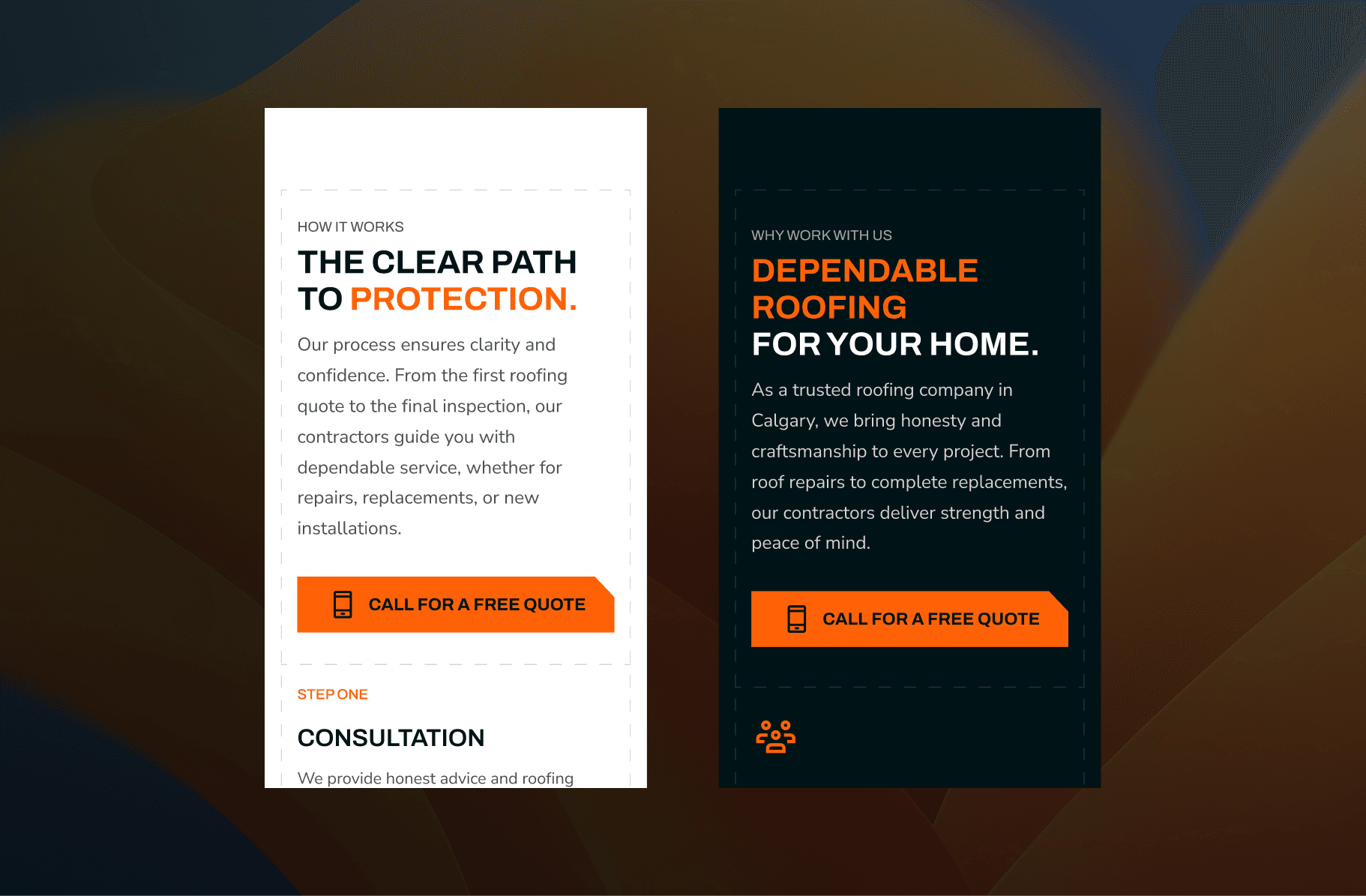
CONVERSION-FOCUSED INTERACTION DESIGN
A key priority during this phase was conversion-focused interaction design, particularly on mobile.
Given that many emergency-related searches happen on mobile devices, I carefully analyzed CTA placement and hierarchy to ensure calling NuHome was always fast, visible, and frictionless.
Primary call actions were emphasized through contrast, repetition, and persistent placement to support quick decision-making under pressure.
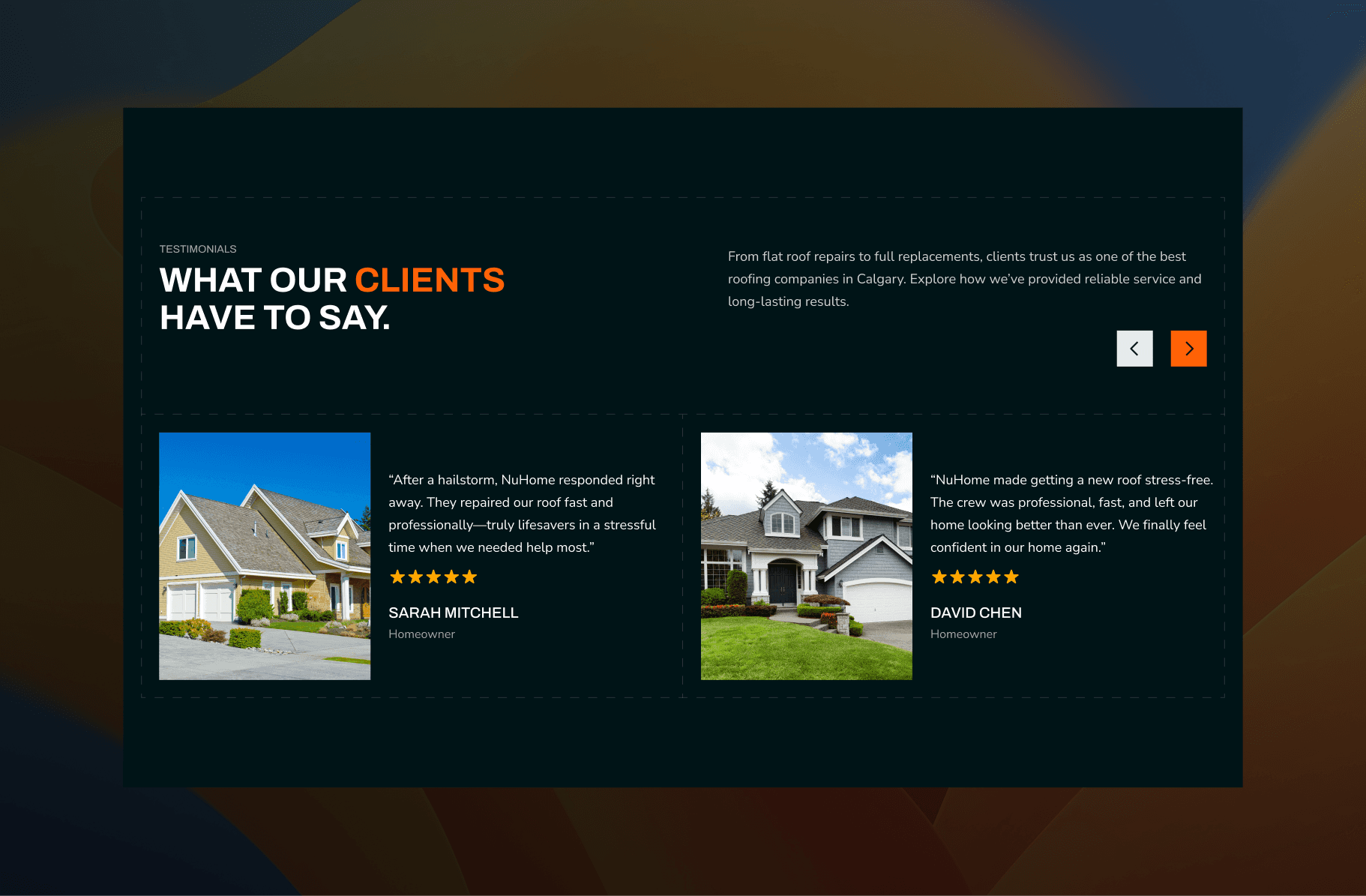
BUILDING CONFIDENCE WITH TRUST SIGNALS
Trust signals were intentionally layered throughout the page experience.
Rather than clustering credibility indicators in a single section, I distributed them progressively as users scroll, reinforcing confidence through service explanations, expertise cues, and local relevance.
This approach ensured trust continued to build alongside the narrative, rather than relying on a single moment of persuasion.
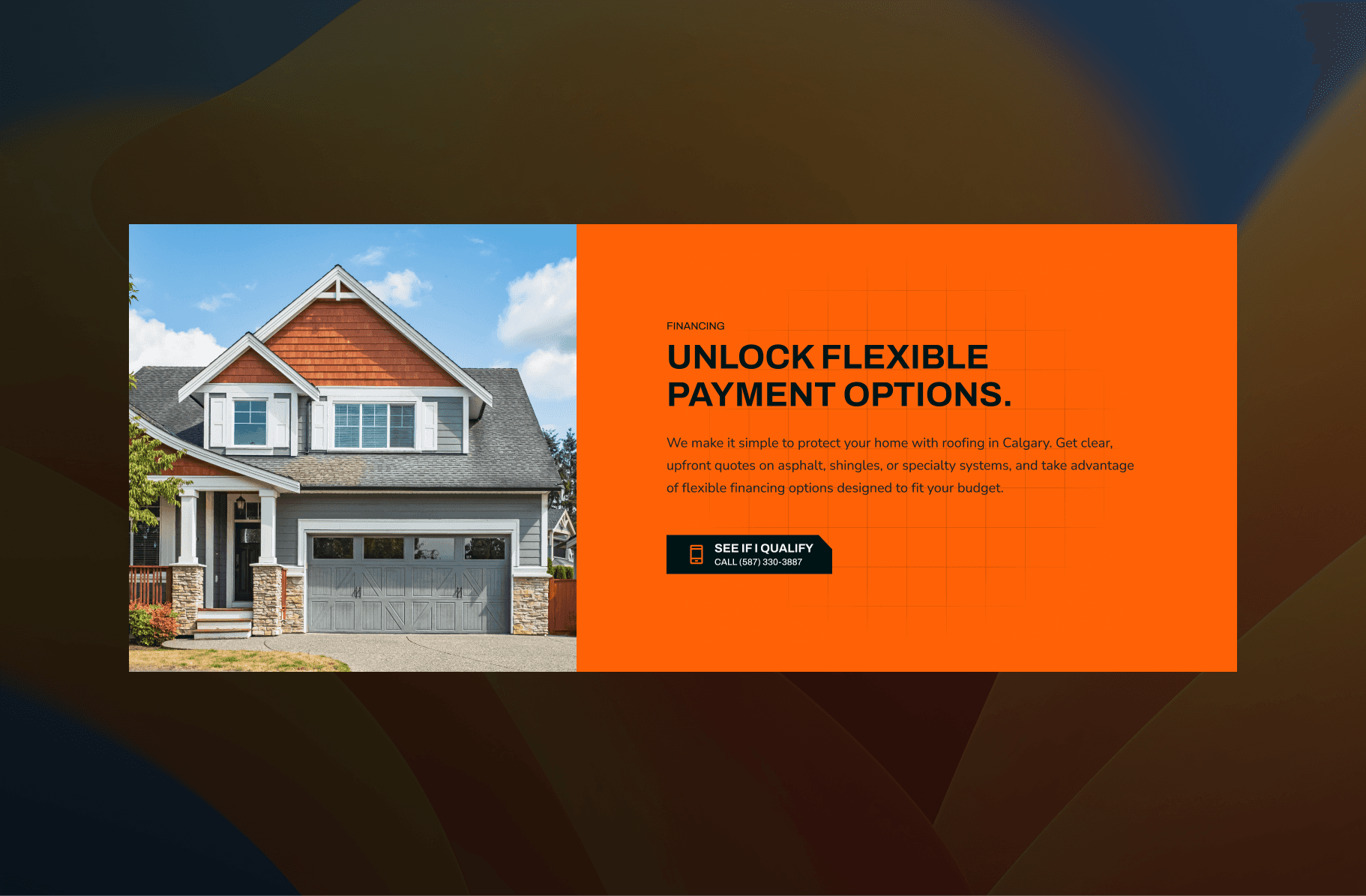
STRATEGICALLY BREAKING THE FLOW
To support conversion without disrupting the experience, CTA sections were strategically placed to break content flow at key decision points.
These moments served as natural pauses, prompting action once enough context and reassurance had been established. Together, these design decisions created a polished, purpose-driven interface that supported both urgency-driven and considered user journeys.
LAUNCH & IMPACT
Following the launch of NuHome’s new digital ecosystem, early performance quickly validated the strategic and design decisions made throughout the project. The combination of clear positioning, strong local intent targeting, and conversion-focused UX resulted in immediate traction.

These results demonstrated the effectiveness of pairing a unified brand with service-specific digital experiences that align closely with user intent.
Beyond revenue and conversions, the launch established NuHome as a recognizable and credible presence in Calgary’s home service market. The new brand and website structure created a scalable foundation, positioning NuHome to continue growing awareness, capturing high-intent leads, and expanding across service verticals.
REFLECTION & NEXT STEPS
While the launch outcomes were positive, one area I would have liked to deepen was direct user research. Due to budget constraints, we were not able to conduct user interviews with end-users. NuHome provided extensive insights as a proxy user, which helped guide early decisions and validate assumptions—however, nothing replaces firsthand conversations with homeowners navigating real renovation decisions.
More direct research would have allowed us to further validate pain points, language choices, and decision-making behaviors—especially for high-consideration services.
This reflection has reinforced the importance of balancing budget constraints with stakeholder expertise and end-user input, particularly for service-based businesses where trust and clarity are critical.